Jock Stewart
The Drover's WifeJock Stewart is Molly Johnson’s father and the first formative influence in her life: a loving but vulnerable parent whose illness, drinking, and early death leave her daughter both equipped for hardship and burdened by unanswered questions about her mother. His practical care helps Molly survive, while his arranged marriage for her and his reticence about her origins shape the family history that returns with consequences for the next generation.
Identity and Background
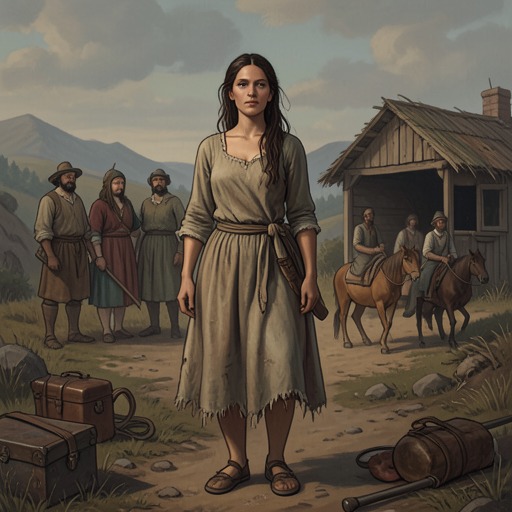
Jock is a drover whom Molly remembers as her da. He is already seriously ill when he makes plans for her future, coughing blood into a handkerchief. Molly recalls that, when he drank, his breathing could become caught in a pattern of heavy snoring; as a child she would nudge him awake and stay beside him until dawn, afraid he might die and leave her with no one to take her in or understand her. Her recollections hold affection and insecurity together: he is the person she depends on, but his illness and drinking make his survival feel uncertain.
The family burial plot later gives his life a concrete marker. Beneath an old snow gum, a homemade wooden cross identifies Jack “Jock” Stewart as Molly’s beloved father and gives his dates as 1807–1869. The inscription’s use of both names reflects the name by which Molly remembers him and the formal name recorded on his grave.
Care, Skills, and Survival
Jock raises Molly without a mother, and the two never speak directly about her. He teaches her practical self-reliance early. By the age of seven, she knows how to hunt and prepare food, including the difficult work of skinning and cooking a kangaroo. Jock’s stated reason is preparation for the possibility that he will die: he wants her to be able to kill and cook a meal for herself. The instruction is an expression of care shaped by the precariousness of their life together; it equips her for the isolation that his death will bring.
His care also includes tenderness and companionship. Molly remembers a Ngarigo woman who helped wash her with lather made from wattle leaves while Jock was hiding with her in the scrub. That childhood encounter remains vivid to Molly, and she later passes on the method when she and Danny wash Alligator, the neglected puppy who becomes the boy’s protector. The memory therefore connects Jock’s household to Indigenous knowledge and care that Molly carries forward into her own family.
Marriage and Death
As he approaches death, Jock arranges Molly’s marriage to Joe Johnson, a young drover he had known through droving. Molly is sixteen and pregnant when Joe leaves on their first drive as husband and wife. Jock’s plan is a marriage of convenience: he hopes it will give Molly social standing and the children she has said she wants. He understands her loneliness as an only child and her desire for a family of her own, but the arrangement also places her in a difficult marriage with a much older man whom she does not describe as affectionate.
Jock dies while Joe is away. Molly buries him with the assistance of the same Ngarigo woman who had once helped her as a child. She remembers the woman’s grief as a powerful expression of mourning, even though the woman had not known Jock. That help becomes part of Molly’s memory of both her father’s death and an enduring form of care beyond the immediate family. His grave, later marked beside those of Jack Joseph Johnson and Mary, anchors the family’s losses in the landscape around their home.
Family Silence and Inherited Memory
Jock never tells Molly about her mother, Mary. Molly grows up without knowing her mother’s touch, voice, or story, and says that the absence feels less like a specific pain than an emptiness. Her father’s silence leaves the question of her origins unresolved. Only when drunk does he sometimes break into incoherent speech and sing “Black is the colour of my true love’s hair.” Molly understands that he knew her mother and carried his own grief, but she receives no clear explanation from him.
The song becomes a fragment of inherited memory: it preserves an emotional connection while withholding the facts that would make that connection intelligible. As a child, Molly dreams of a woman with long black hair. Years later, she recalls that the same Ngarigo woman who helped bury Jock and her firstborn son also showed her a gesture that she understood as meaning “always with you.” Molly associates that act with the woman’s earlier care and continues it herself. Through these remembered acts, Jock’s household is linked to a maternal history that he could not, or did not, explain.
Legacy in Molly’s Story
Jock’s influence persists through both what he taught and what he left unsaid. His survival lessons help make Molly resourceful and capable of caring for her children in isolation; his decision to arrange her marriage reflects his hope that she will gain status and the family she longs for. Yet the marriage does not erase her vulnerability, and his death leaves her to confront bereavement, early motherhood, and the loss of her firstborn largely on her own.
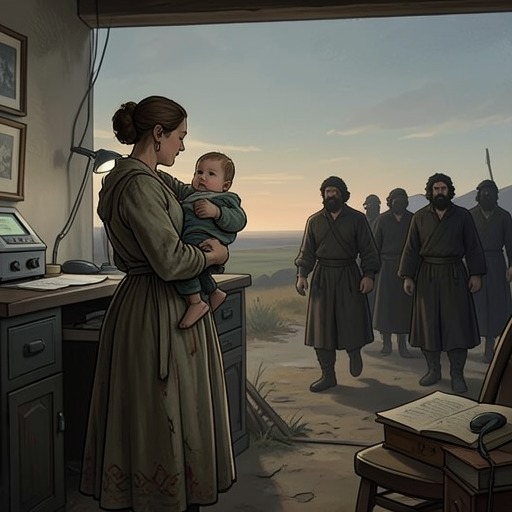
The family history surrounding Jock and Mary later becomes politically consequential. In a conversation about Molly’s parentage, Miss Shirley repeats gossip that Jock pursued Black Mary and claims that Mary’s father was Charles Edwards, while presenting Molly’s mixed heritage as grounds for classifying and removing her children. The novel establishes these statements as allegations and racialized claims, not as a settled account supplied by Jock. In the later hearing, Molly’s heritage is used against her, and the Crown frames her actions as generational hatred influenced by what she learned about her family. Jock’s silence thus has a double legacy: intimate grief for his daughter and an absence of family knowledge that others exploit. His remembered care remains real, but it cannot protect Molly or her children from the racial power exercised over their lives.